20 Years of Chinese Hygiene Materials: From Buying Japanese Fiber to Running Alongside
2026-09-05
Most people assume the most valuable thing inside a sanitary pad or a diaper is the cotton or the absorbent beads. In reality, what usually decides a product's grade is something you never see — the fiber in the topsheet nonwoven.
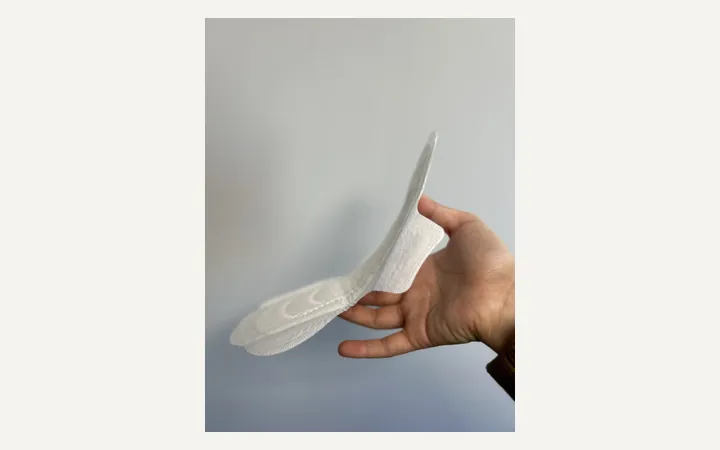
A veteran engineer who has spent his whole career in fibers walked me through how this supply chain evolved. It is one of the quietest industrial stories of the last twenty years.
When good fiber had to be imported — from one named factory
In the early years, Chinese mills could not produce topsheet fiber at the level the best products required. If you wanted top-grade material, you bought Japanese. And even then, it was not a simple purchase: Japanese suppliers specified exact factories, exact fiber grades, and participated deeply in how the raw polymer was developed. Their technical wall ran from the polymer particle all the way to the finished product.
That is what a real moat looks like. Not one secret process — a chain of controlled capabilities.
The PP to PET shift
The catch-up story since then has been steady. One example the engineer gave: European hygiene products still commonly use PP and PE-based nonwovens, with thicker, larger fiber. Chinese-made products exported to Europe have increasingly moved to PET-based fiber. The step from PP to PET is a step in elasticity — the fiber has more give, conforms better, feels softer in use. Beyond PET, higher-elasticity materials already exist in development. That is the direction the whole industry is walking.
Fiber cross-sections tell the same story. The old standard was a simple concentric circle. Now Chinese mills develop eccentric, hollow, and shaped cross-sections — each one tuned for a different hand-feel or fluid-handling behavior. The details are where the differentiation lives.
From "cannot buy" to "can build"
The sentence the engineer repeated, with some emotion, was this: technologies we did not dare imagine twenty years ago are now things Chinese fiber mills produce themselves — and not far behind the Japanese.
I run supply chains for a living, and I have watched this closure happen with my own eyes. It is why I push back when buyers assume import-everything is the only path to quality. For hygiene products manufactured in China, the domestic material chain is now fully capable of premium grades — and it shortens lead times and stabilizes supply in ways a pure import strategy cannot.
This is also the context for why I argue this industry's real gap is R&D, not materials. The materials race has largely been run to parity. What happens next depends on what we design with them. Importers building private-label programs can read more about sourcing feminine hygiene from China.
Technology, given the right direction and honest investment, gets caught up to. The part after catching up — creating rather than copying — is the part still being written.
Li Genyuan is the founder of Guangdong Nafei Biotechnology, a feminine hygiene OEM/ODM manufacturer. More from Founder's Notes.
Turn this guide into an OEM brief
Share your product direction, target market, packaging idea and sample questions. Nafei can help translate the buying guide into a practical RFQ discussion.
- Product type: period pants, sanitary pads or mixed OEM project
- Target country, channel and buyer positioning
- Size range, material preference and sample review focus
- Private label artwork, pack count and estimated quantity