The keyword “menstrual pants” is unusually ambiguous. A buyer can receive quotations from disposable hygiene converters, garment factories and incontinence-product suppliers for what appears to be the same request. Product definition must come before price comparison.
1. Define the product category in the first RFQ line
| Product term | What it should mean in the RFQ | Factory type to verify |
|---|---|---|
| Disposable menstrual pants | Single-use absorbent feminine hygiene pants | Disposable hygiene converting and packing capability |
| Side-open menstrual pants | Single-use pants with a buyer-approved side-opening construction | Relevant disposable pants production and sample evidence |
| Reusable period underwear | Washable textile garment with absorbent and barrier layers | Garment cutting, sewing and textile QC |
| Adult incontinence pants | Separate adult-care product category | Adult incontinence product capability |
Use the disposable vs reusable comparison if your team is still deciding which product system to source.
2. Verify the factory can make the requested construction
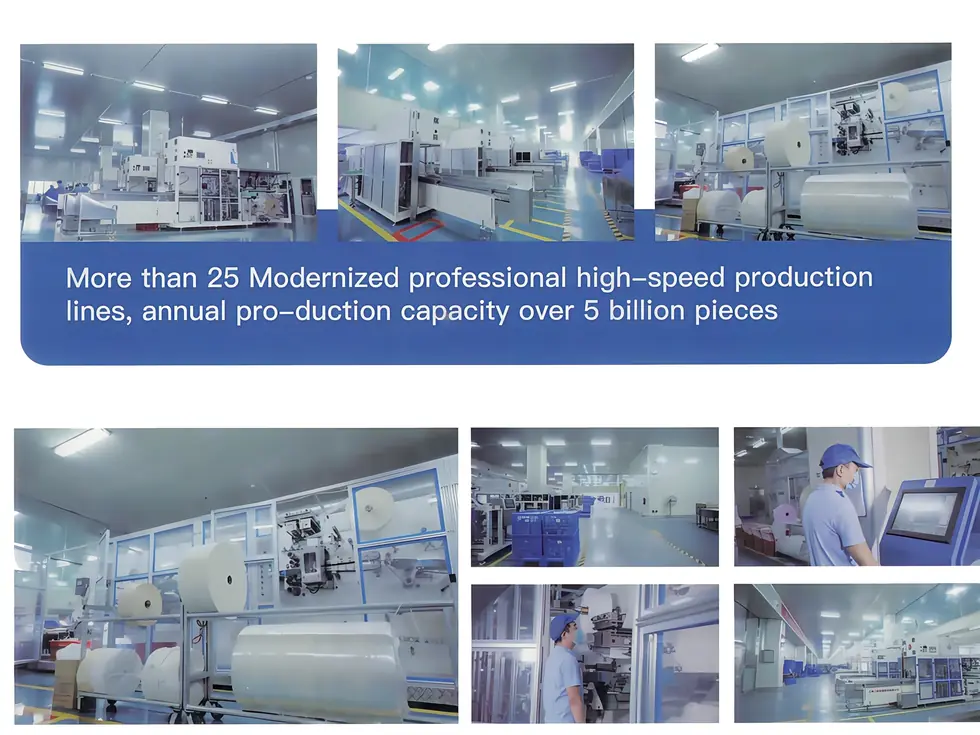
Ask the factory to connect your project to the relevant production, sample, inspection and packing process. For disposable menstrual pants, the review should cover the absorbent core, surface, backsheet, elastic waist, leg opening, side leakage guard and pull-up or side-open construction.
A supplier showing only product photos has not yet demonstrated that the proposed factory and process match the RFQ.
3. Build a size and fit specification
- Requested size labels and target body range
- Product dimensions and size-grading logic
- Waist stretch and fit direction
- Leg-opening requirement
- Core and leakage-guard position by size
- Pull-up or side-open construction
- Sample wear or fit-review plan appropriate to the project
Do not approve one size and assume every other size will scale correctly. Review the requested size range, especially where artwork, pack count or product structure differs.
For a step-by-step view of how the disposable pants structure is made, review the sanitary pants manufacturing process before final sample approval.
4. Define the use scenario without medical claims
Overnight, heavier-flow, postpartum, cooling and plus-size programs require different buyer inputs. For example, an overnight direction may prioritize coverage and core placement; a cooling direction should use evidence-based comfort wording; a postpartum direction should avoid turning a care product into a health claim.
5. Review absorbency, rewet and leakage-control methods
Ask which method the factory proposes for the specific sample and how acceptance will be decided. Record the sample version, liquid, quantity, timing, pressure and other relevant conditions where applicable. A performance number without a method and sample identity is not comparable.
6. Inspect waist, leg opening and side construction
| Area | Buyer review | Common risk |
|---|---|---|
| Waist | Fit direction, elasticity and consistency | Too loose, too tight or inconsistent by size |
| Leg opening | Fit, elastic placement and alignment | Gaps, discomfort or leakage path |
| Side guard | Construction and position | Misalignment or inconsistent seal |
| Side-open feature | Opening method and approved sample | Difficult removal or weak construction |
| Core position | Placement for the intended use scenario | Coverage does not match the buyer brief |
7. Control samples and revisions
Keep a revision log that states what changed, why it changed, which sample was reviewed and whether it was approved. Fit, structure, packaging and claim wording should not be managed through disconnected messages.
The approved sample should be paired with the written specification and final artwork. Together they become the baseline for bulk production.
8. Verify private-label packaging
Check size labels, product terminology, pack count, language, barcode, individual wrap or retail bag, and carton marks. Make sure the packaging clearly describes a disposable, single-use product and does not imply that it is washable underwear.
9. Compare MOQ and lead time using the same brief
Size mix, construction, material choice, pack format, artwork readiness, revisions and quantity can all affect MOQ and timing. Ask each factory to quote the same product and packaging specification. A low number based on a standard product cannot be compared with a quotation for a new multi-size private-label program.
10. Review repeat-order and change control
Ask how material, supplier, construction, dimensions, artwork and packing changes are communicated. Repeat orders should be compared with the current approved specification and sample. Require buyer approval for changes that affect the agreed product.
Factory comparison scorecard
| Area | Evidence to request | Warning sign |
|---|---|---|
| Product identity | Clear disposable product definition | Uses disposable and reusable terms interchangeably |
| Factory match | Relevant production and packing explanation | Only generic catalogue images |
| Fit control | Size map and approved samples | No size-grading discussion |
| Performance | Agreed method and sample identity | Unsupported performance promise |
| Packaging | Controlled artwork and size labels | Unclear product terminology |
| Repeat orders | Approved baseline and change record | Changes handled informally |
Frequently asked questions
What is a menstrual pants factory?
For this guide, it means a factory producing disposable, single-use menstrual pants. Buyers should confirm the factory is not quoting reusable underwear or adult incontinence pants.
How do I verify that a factory makes disposable menstrual pants?
Ask it to explain the relevant product construction, production, sample, inspection and packing process and provide project-specific evidence.
Which sizes should I request?
Choose sizes based on the target market and product direction. Ask for a size map and approve each required size rather than assuming one sample covers all sizes.
How should fit be checked?
Define waist and leg-opening requirements, size grading and sample review. The exact method should suit the product and market.
Can a garment factory make disposable menstrual pants?
Do not assume it can. Disposable absorbent pants and washable garments use different materials, processes and quality controls.
What affects menstrual pants OEM MOQ?
Construction, size mix, materials, packaging, artwork setup, number of SKUs and order planning can affect MOQ.
What should the packaging say?
It should accurately identify a disposable, single-use menstrual product and include the agreed size, pack count, language, barcode and other market-required information.
Where can I review Nafei's factory and products?
Review the sanitary pants factory page, product collection and OEM service.
Send a factory-comparable menstrual pants RFQ
State disposable or reusable, construction, sizes, fit, use scenario, packaging, quantity and evidence requirements. Send the controlled brief through the Nafei contact page.