
Three Simple Ways to Judge Sanitary Pad Dryness After Use
2026-06-27
In a consumer interview, industry expert Jiao Yong made a comment that surprised many women in the room: some Chinese sanitary pad brands are already very strong, and in some areas they can be considered globally advanced. The problem is that many users do not know how to judge the product.
His method is simple. Do not rely only on touching the dry sample. Do not rely on fragrance. Do not rely on advertising words. Look at the pad after use, and review what the structure actually did.
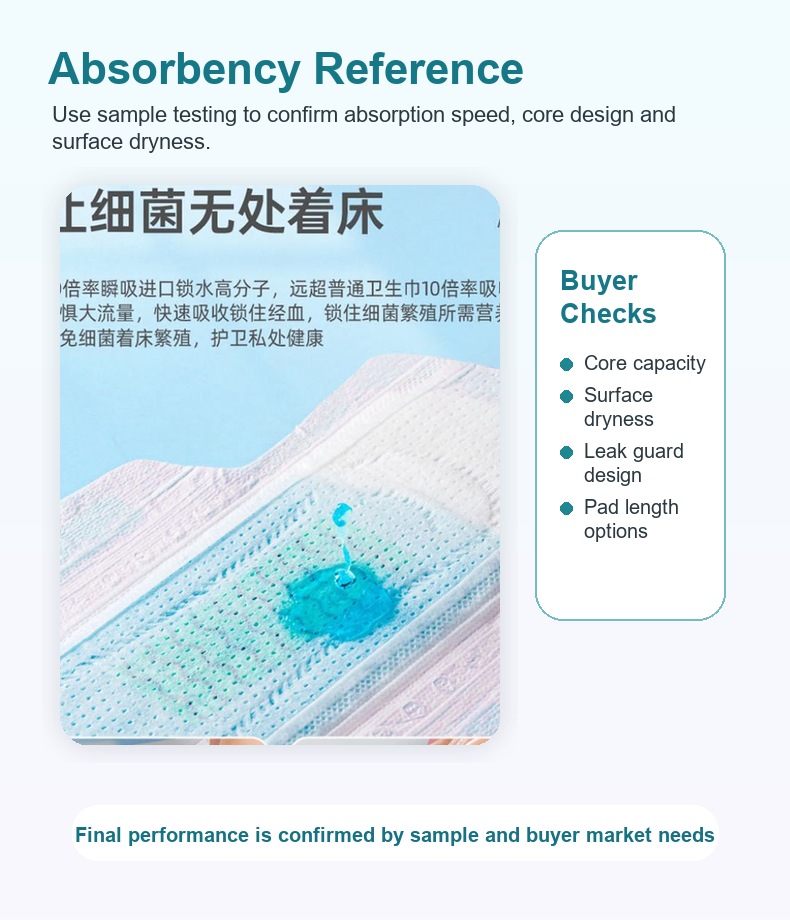
First: Check the Depth of Color on the Surface
After changing the pad, do not throw it away immediately. Look at the color remaining on the topsheet. If the color looks lighter and less concentrated on the surface, it often means more fluid has moved down into the absorbent structure instead of staying on top.
Jiao Yong explained that some users may even feel that the amount looks smaller than usual when trying a better-performing sample. The amount is not necessarily smaller. More of it may have been transferred downward, so the topsheet does not show as much residue.
For OEM buyers, this is a very practical review point. A dark, wide and sticky-looking surface can mean the topsheet and acquisition layer are not moving fluid down efficiently enough. A lighter and cleaner-looking surface usually supports a drier wearing experience.
Second: Check Whether the Embossing Looks Full
Before use, place a fresh pad under side light and look at the embossing pattern. Is it flat and collapsed, or does it have a clear three-dimensional shape? A full and raised pattern can help create small gaps between the topsheet and the body.
Jiao Yong compared this to a pillow. When pressed, a good pillow rebounds. A topsheet also needs enough loft and structure. If the surface is flat, it may cling more closely after wetting. If the pattern remains fuller, the surface can feel less stuffy during use.
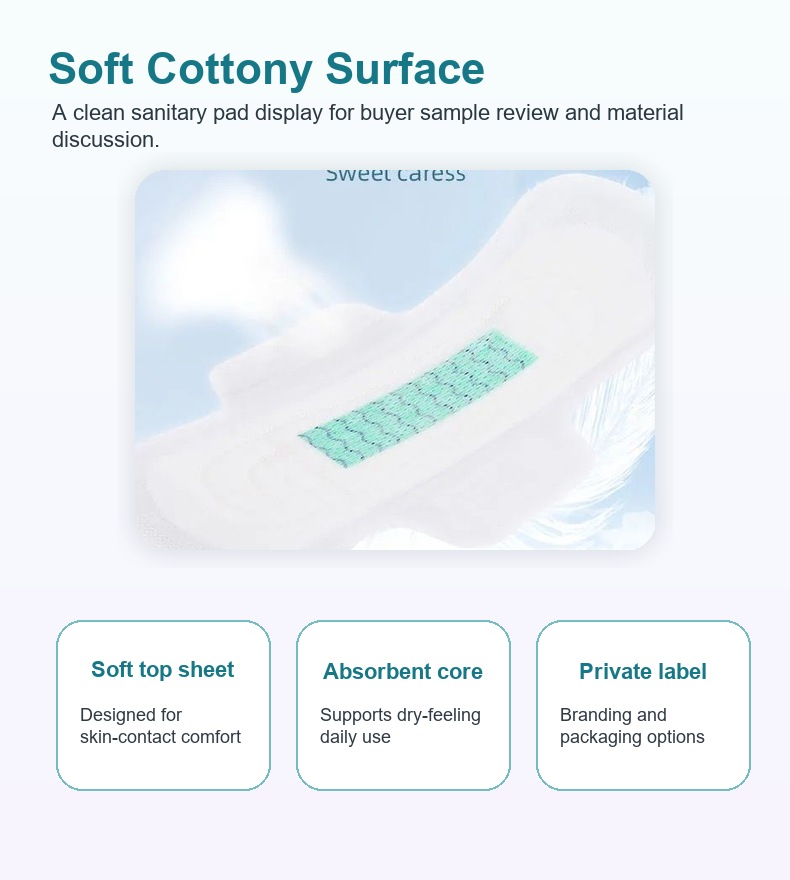
Third: Turn It Over and Check the Spread Area
After use, turn the pad over and look at the back side. A wider and more even distribution inside the absorbent core can reduce concentrated pressure in one small area. If everything stays in the center, sitting pressure may push moisture back upward.
This is one reason mature sanitary pad structures often show clear internal distribution. The front surface may look relatively controlled, while the absorbent core spreads fluid over a larger area inside the product. That is not accidental. It is part of the product technology.
| Simple check | What to look for | OEM meaning |
|---|---|---|
| Surface color | Lighter color and less visible residue | Better downward transfer and dry surface potential |
| Embossing fullness | Raised, elastic and three-dimensional pattern | More surface loft and less flat contact after wetting |
| Back-side spread | Wider and more even distribution inside the core | Lower concentrated pressure and better rewet control |
Why These Three Checks Matter for OEM Buyers
These three actions take less than ten seconds: check the used surface color, inspect the fresh embossing, and turn the used pad over to review spread. They do not replace laboratory tests, but they help buyers and brand teams see whether a sample is moving in the right direction.
Words such as soft, gentle or breathable are easy to print on packaging. Actual use is harder. A private label buyer should connect packaging claims with real sample behavior before confirming material, structure and artwork.
OEM Sample Review Checklist
| Review item | Buyer question | Suggested record |
|---|---|---|
| Topsheet | Does the surface look clean after fluid transfer? | Photo after the same test amount and timing |
| Embossing | Does the pattern stay full or collapse easily? | Side-light photo before and after pressure |
| Core distribution | Does fluid spread through the core instead of staying in one spot? | Back-side photo and spread notes |
| Rewet | Does pressure bring moisture back to the topsheet? | Pressure review result before bulk approval |
FAQ for Private Label Sanitary Pad Buyers
Can these checks replace formal testing?
No. They are practical review habits for buyers and brand teams. Formal specification, absorption, rewet and safety-related documents should still be confirmed before mass production.
Should consumers judge a pad only after use?
Not only after use. A good review combines before-use surface structure, after-use topsheet appearance, and back-side spread. Together, these checks tell more than dry hand-feel alone.
How should OEM buyers use this during sample approval?
Compare all samples under the same conditions. Use the same fluid amount, timing, pressure and photo angle. Then discuss topsheet, core, embossing and packaging wording with the factory before final confirmation.
Source Note
The product judgment points in this article are adapted from April 2026 consumer interview notes featuring Jiao Yong and Liu Haiwei from Fengge Nonwoven. The English version has been rewritten for overseas sanitary napkin OEM buyers.
Contact Ligenyuan
If you are developing private label sanitary pads, sanitary napkins or disposable menstrual pants, we can help review sample structure, topsheet direction, absorbent core design and packaging wording before mass production.
WhatsApp: +86 135 0848 9525
Email: ligenyuan901@gmail.com
Related pages: Contact Nafei | Sanitary Napkin OEM | Ligenyuan OEM Sourcing Column
Turn this guide into an OEM brief
Share your product direction, target market, packaging idea and sample questions. Nafei can help translate the buying guide into a practical RFQ discussion.
- Product type: period pants, sanitary pads or mixed OEM project
- Target country, channel and buyer positioning
- Size range, material preference and sample review focus
- Private label artwork, pack count and estimated quantity