Why Dry Surface Matters More Than Softness in Sanitary Napkin OEM
2026-06-27
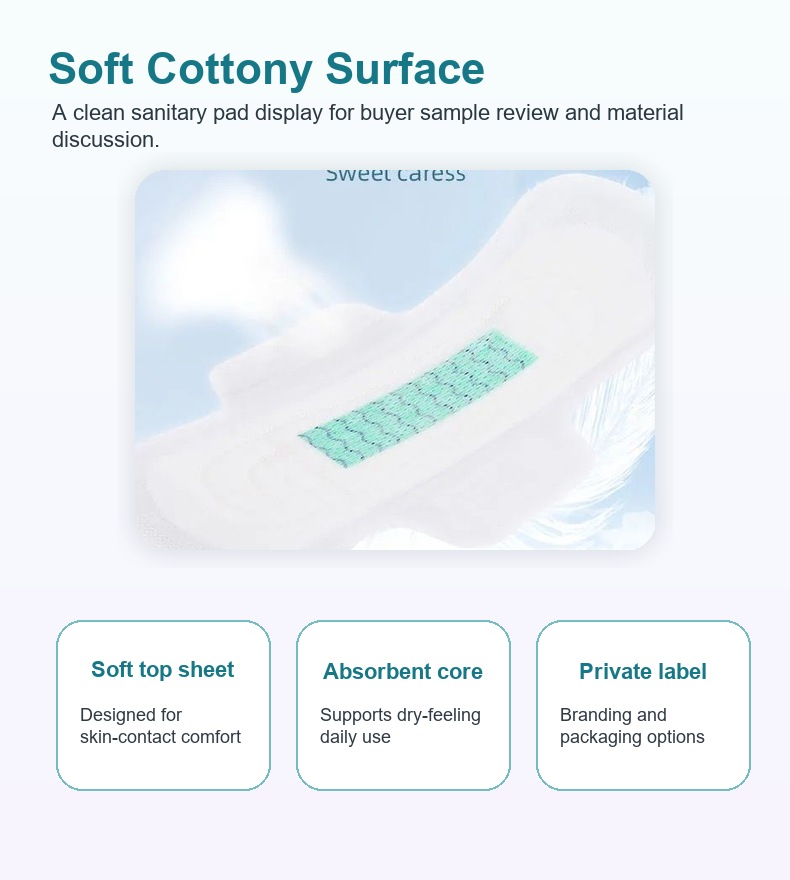
When sanitary napkin buyers discuss topsheet materials, the first word they often use is softness. A soft surface is easy to touch, easy to compare, and easy to describe in packaging copy. But in real use, softness alone does not decide whether a pad feels comfortable.
In an industry interview, Jiao Yong used a simple question to challenge this common assumption: if cotton is always the best answer, would you accept a towel as the topsheet? A towel can be cotton and highly absorbent, but placing a wet, absorbent textile close to the body for hours is not what a sanitary napkin is designed to do.
The Real Requirement: Leakage Control and Skin Comfort
For sanitary napkin OEM development, the basic requirement is not to create the softest hand-feel on a sample table. The product must manage fluid, keep the surface from feeling wet for too long, and support everyday skin comfort during actual use.
This is why a buyer should not judge the topsheet only by touching it with fingers. A pad is used in a naturally humid environment. If liquid remains on the surface, spreads widely, or returns upward after pressure, the user may describe the experience as damp, stuffy, sticky or uncomfortable.
Softness Is Easy to Sell. Dryness Is Harder to See.
Softness is a shelf-friendly selling point. A buyer can touch a sample, press the surface, and compare several brands in a few seconds. Dryness is different. It only becomes clear after the pad is used, pressed, moved, and reviewed as a whole structure.
| Review point | What buyers can feel quickly | What needs sample testing |
|---|---|---|
| Topsheet softness | Hand-feel, smoothness, cushion feel | Whether the surface still feels dry after fluid pass-through |
| Surface residue | Not obvious in dry samples | How much liquid stays on the topsheet after use simulation |
| Spread area | Not visible before testing | Whether fluid stays localized or spreads too widely |
| Rewet feeling | Cannot be judged by touch alone | Whether pressure brings moisture back to the surface |
Why Air-Through Nonwoven Became a Mainstream Topsheet Choice
Air-through nonwoven material is widely used because it can be fluffy, clean-feeling and efficient at letting liquid pass through. It does not need to win a ?pure cotton? story to work well. The key is whether the whole structure moves fluid downward into the acquisition layer and absorbent core instead of holding too much moisture on the top layer.
Cotton itself is not wrong. The problem is taking ?cotton? as a final answer without asking how it behaves after wetting. If a cotton-based surface is used, it should be engineered carefully so that it does not hold moisture like a towel. In OEM development, material names matter less than structure behavior.
What OEM Buyers Should Ask During Sample Review
Does liquid pass through the surface quickly?
The topsheet should guide fluid downward instead of allowing it to stay and spread on the surface. Fast pass-through helps the pad feel cleaner in use.
Is the visible spread area controlled?
A smaller and more controlled spread area usually means the surface and acquisition layer are working together more effectively. Buyers should review this with a consistent sample test, not only by looking at dry materials.
Does the surface remain comfortable after pressure?
Movement, sitting and pressure can change the user experience. A good OEM sample review should include rewet and pressure checks, not only softness checks.
| OEM sample question | Why it matters | Buyer action |
|---|---|---|
| How fast does fluid enter the core? | Slow pass-through can create a damp feeling | Compare samples under the same test amount |
| How much moisture remains on top? | Surface residue affects wearing comfort | Check surface color, spread and touch after testing |
| Does pressure cause rewet? | Real use includes sitting and movement | Add pressure review before approving bulk orders |
| Is the claim wording realistic? | Packaging should match the actual sample result | Use practical wording such as dry surface, fast absorption and comfort review |
FAQ for Sanitary Napkin OEM Buyers
Should private label buyers always choose the softest topsheet?
No. A soft hand-feel is useful, but it should not be the only decision point. Buyers should also review pass-through speed, surface residue, spread control and rewet after pressure.
Is cotton always better for sanitary napkin topsheets?
Not automatically. Cotton can be used in some designs, but the structure must be engineered carefully. The important question is whether the topsheet supports a dry and comfortable wearing experience.
How can a buyer compare different topsheet samples fairly?
Use the same fluid amount, timing, pressure and review method for each sample. Record surface appearance, spread area, rewet feeling, pad length, core design and packaging direction before confirming the final OEM specification.
Contact Ligenyuan
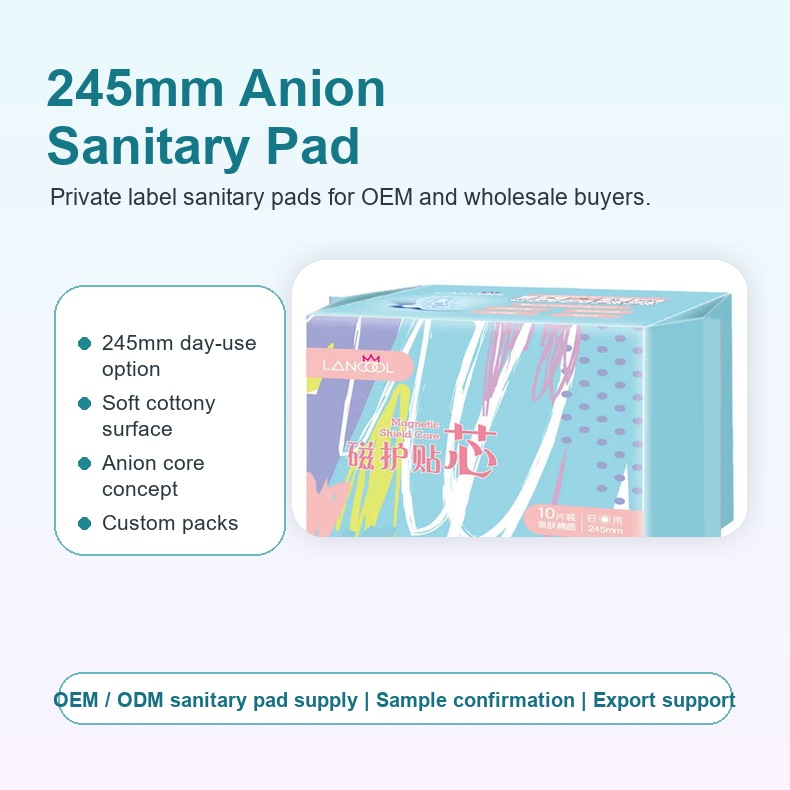
If you are developing private label sanitary napkins, anion sanitary pads or disposable menstrual pants, we can help review material structure, sample direction and packaging wording before mass production.
WhatsApp: +86 135 0848 9525
Email: ligenyuan901@gmail.com
Related pages: Contact Nafei | Sanitary Napkin OEM | Ligenyuan OEM Sourcing Column
Turn this guide into an OEM brief
Share your product direction, target market, packaging idea and sample questions. Nafei can help translate the buying guide into a practical RFQ discussion.
- Product type: period pants, sanitary pads or mixed OEM project
- Target country, channel and buyer positioning
- Size range, material preference and sample review focus
- Private label artwork, pack count and estimated quantity