OEM/ODM Sanitary Napkins: Product Development Guide for Buyers
2026-06-04
Product development is where private-label pads are won or lost. Most buyers treat it as "pick a template," which is why so many private-label pads feel identical. Here's how to actually develop one that fits your shelf.
Start from the user, not the catalogue
Before touching a spec, name the wearer: climate, flow level, whether she wants ultra-thin or max protection. Our napkin platform can be tuned to those, but only if the brief is real. "A good pad" is not a brief.
The development sequence that avoids rework
- Absorbency target — set the ml and the rewet limit first; everything else hangs off this.
- Topsheet — woven vs perforated film vs cotton-feel; pick by wear test, not the name.
- Core — SAP grade and distribution decide thinness vs capacity. Name the grade.
- Backsheet & adhesive — breathability and stay-put under movement.
- Pack — count, wrapper, artwork, regulatory marks. Print the real proof.
Sample checks that catch a bad product early
| Check | What a pass looks like |
|---|---|
| Rewet after load | Surface stays dry on the test weight |
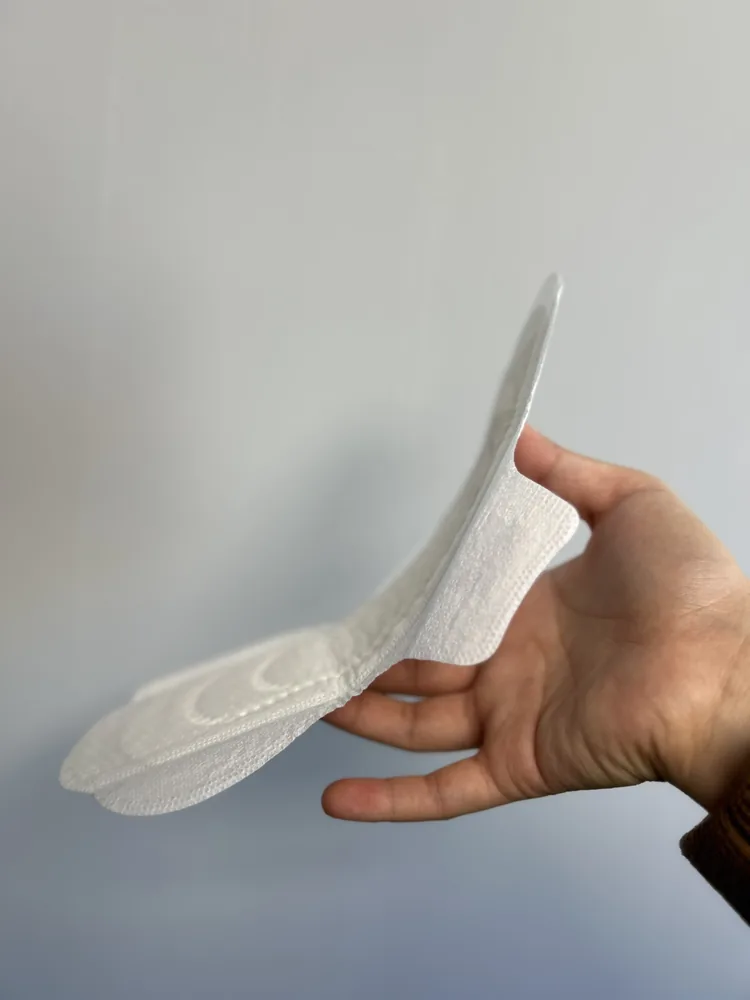
| Wing adhesion | Holds through a movement sim, no lift |
| Core integrity | No bunching or gel leakage under pressure |
| Topsheet feel | Matches the approved wear sample |
Materials — name them or lose them
"Premium SAP" is not a material. A grade is. A supplier who names the SAP and holds it contractually is controlling your quality; one who won't is controlling their margin. Same for the topsheet source — in-house means someone owns the outcome.
MOQ and the development cost
Development isn't free — artwork, plates, and changeover are fixed costs you'll repeat at reorder. A from-scratch core costs more to set up than a tuned platform SKU. Budget for the setup, not just the unit price, or the second order surprises you.
Questions buyers actually ask
How long does napkin development take?
After a real brief: sample in days to a couple weeks depending on how custom the core is, then a trial run before bulk. Vague briefs slip because they get reworked.
Can I specify the SAP grade?
Yes, and you should. Naming the grade and holding it contractually is what keeps quality stable across reorders.
What if I only have a rough idea?
Start from the guides with a user sketch, then the team helps turn it into a spec via contact.
Is ODM or OEM better for a new brand?
ODM gets you to market faster from a proven platform; OEM fits when you already own a tight spec. Match the model to how finished your brief is.
Ready to develop your napkin?
Contact the Nafei team to turn a user brief into a sampled spec.
Turn this guide into an OEM brief
Share your product direction, target market, packaging idea and sample questions. Nafei can help translate the buying guide into a practical RFQ discussion.
- Product type: period pants, sanitary pads or mixed OEM project
- Target country, channel and buyer positioning
- Size range, material preference and sample review focus
- Private label artwork, pack count and estimated quantity