The goal is not to find the factory with the longest sales presentation. It is to find a production partner that can turn your product brief into a repeatable order and explain what happens when a material, sample, artwork or shipment detail changes.
1. Confirm that the supplier is the right type of factory
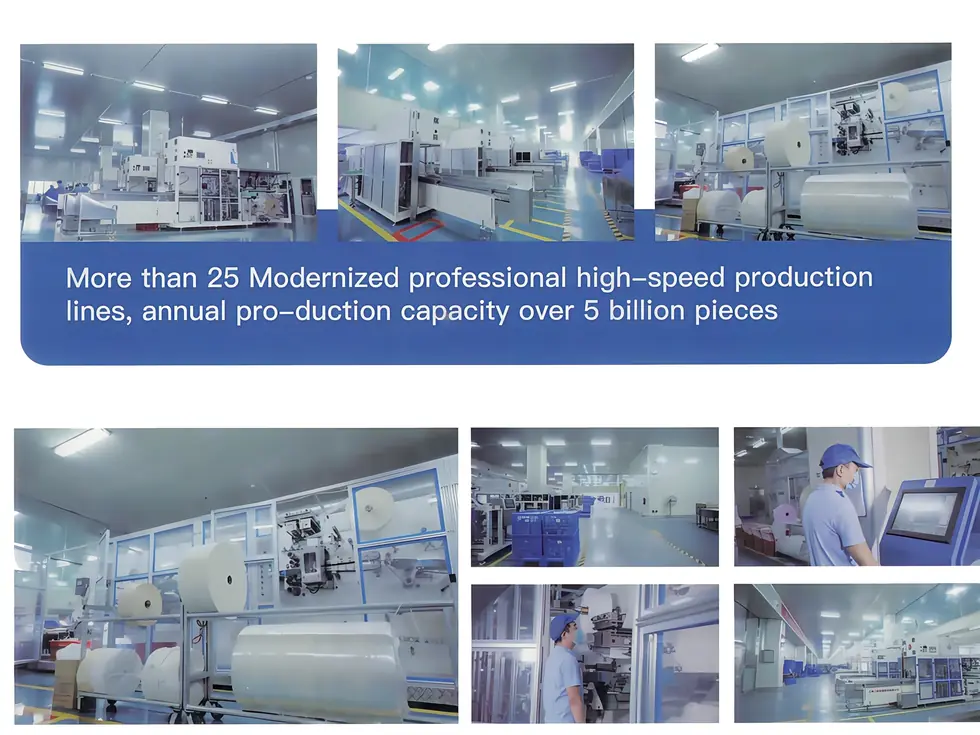
Ask the supplier to show how the requested product moves through production, inspection and packing. A useful review connects the relevant production area, sample process, packing files and order records. If the supplier cannot explain which line, process or partner handles the product, treat the claim as unverified.
Nafei's sanitary pads factory page organizes the main buyer review points without relying on fixed production or MOQ claims.
2. Send one controlled product specification
| Specification field | What the buyer should define | What the factory should confirm |
|---|---|---|
| Product type | Day, night, ultra-thin, liner or other verified direction | Available construction and current sample |
| Dimensions | Length, shape and wings | Production tolerance and reference sample |
| Surface and core | Surface feel and absorbency direction | Material/specification match and review method |
| Packaging | Pack count, wrapper, bag or box, language and barcode | Artwork process, printing setup and packing control |
| Commercial plan | Quantity, SKU mix, destination and target date | Project-specific MOQ, schedule and shipment plan |
Send the same specification to every shortlisted factory. Otherwise, quotations and samples cannot be compared.
3. Review samples from the intended production process
A showroom sample may prove that a product exists, but it does not prove repeatability. Ask how the sample relates to the proposed bulk structure and whether changes will be recorded. If a sample is revised, maintain a simple log: requested change, factory response, sample version, buyer decision and approval date.
- Product name and version
- Dimensions and construction
- Surface and core direction
- Appearance and sealing
- Packaging mock-up and artwork version
- Buyer comments and final approval
Before comparing samples, review the sanitary pad manufacturing process so the approved sample, material structure and production checks can be evaluated together.
4. Ask for a quality-control flow, not a slogan
A practical quality discussion covers incoming material review, specification confirmation, in-process appearance and sealing checks, agreed performance review, finished-product inspection and packing verification. The factory should explain which checkpoints apply to your order and what evidence can be shared.
Do not accept “documented QC” as a complete answer. Ask who checks, what is checked, when it is checked, how an issue is recorded and what happens to affected goods.
5. Verify documents by name, scope and validity
Ask for the current document relevant to the company, facility, product or target market. Confirm the issuing body, certificate holder, scope and validity date. Do not convert a management-system certificate or a third-party report into a product approval claim.
If a document cannot be shared during initial screening, ask the supplier to state exactly what can be reviewed later and under what conditions. Keep unsupported certification names out of your marketing copy.
6. Inspect packaging and artwork control
Many private-label errors happen after the product itself is approved. Review individual wrapper, retail bag or box, pack count, language, barcode, batch information and carton marks. Establish one final artwork version and require written approval before printing.
For multiple sizes or SKUs, use a matrix that pairs each product code with the correct size, pack artwork and carton information.
7. Understand what drives MOQ and lead time
MOQ can be influenced by the product structure, number of SKUs, packaging print setup, materials and production planning. Lead time can be influenced by sample revisions, artwork readiness, printing, order size and shipment preparation. Ask for a project-specific breakdown rather than one generic number.
8. Check change control before the first order
Your agreement should state how the factory handles changes to raw material, supplier, specification, production process and artwork. The buyer should approve material or product changes before they enter production when the change affects the agreed specification.
This is especially important for repeat orders. Keep the approved sample, specification and artwork version as the baseline for comparison.
9. Run a pilot and inspect the handover
Where commercially practical, begin with a controlled first order or pilot rather than treating one sample as proof of long-term consistency. Before shipment, align inspection scope, carton quantities, packing evidence and required documents. Record lessons from the first order for the repeat-order file.
Factory comparison scorecard
| Area | Strong evidence | Warning sign |
|---|---|---|
| Factory match | Explains the relevant production and packing process | Only sends generic company slides |
| Specification | Confirms a written project spec and sample version | Quotes before clarifying the product |
| Quality | Explains checkpoints, records and issue handling | Uses only “high quality” language |
| Documents | States name, scope, holder and validity | Lists unrelated logos without files |
| Packaging | Controls artwork, pack count and carton marks | No version approval process |
| Repeat orders | Keeps an approved baseline and change record | Changes are communicated informally |
Frequently asked questions
How can I tell whether a sanitary pad supplier is a real factory?
Ask the supplier to connect your product to the relevant production, sampling, inspection and packing process. Request project-specific evidence rather than relying only on a business description.
What should I ask during a factory audit?
Review material control, specification management, production checkpoints, sample records, quality issue handling, packaging control, traceability and change management.
Should I choose the lowest quotation?
No. Compare quotations based on the same specification and include packaging, testing, samples, quality handling, payment, shipment and repeat-order risk.
How many samples should I review?
Review enough versions to confirm the written specification and, where possible, verify the approved design through a controlled first production order.
Which certifications should a sanitary pad factory have?
There is no universal list for every market. Request the documents relevant to the company, product and destination, then verify holder, scope, issuing body and validity.
What affects sanitary pad OEM MOQ?
Product structure, materials, SKU count, size mix, packaging printing and order planning can all affect MOQ.
What should be written into the quality agreement?
Include the approved specification, inspection responsibilities, issue handling, change notification, artwork control and the evidence required before shipment.
Where can I request a Nafei factory review?
Use the contact page and send the product, length, surface, packaging, quantity, market and sample requirements.
Turn the checklist into an RFQ
Review the manufacturer overview, OEM service and factory capability hub, then send one controlled project brief through the contact page.