Hygiene Products Are Not a Material-Stacking Contest: OEM Development Depends on Structure
2026-06-26
When many buyers start a hygiene products OEM project, the first questions are often very direct: Can the absorption be higher? Can the material be more expensive? Can the topsheet be softer? Can the product be thicker so it looks more reassuring?
These questions matter, but if product development only focuses on one material or one parameter, the project can easily move in the wrong direction.
Hygiene products are not a material-stacking contest. What really decides whether a product works well is usually not how strong one single material is, but whether the whole structure is matched to the right user and the right scenario.
A Finished Hygiene Product Is a Structure, Not One Material
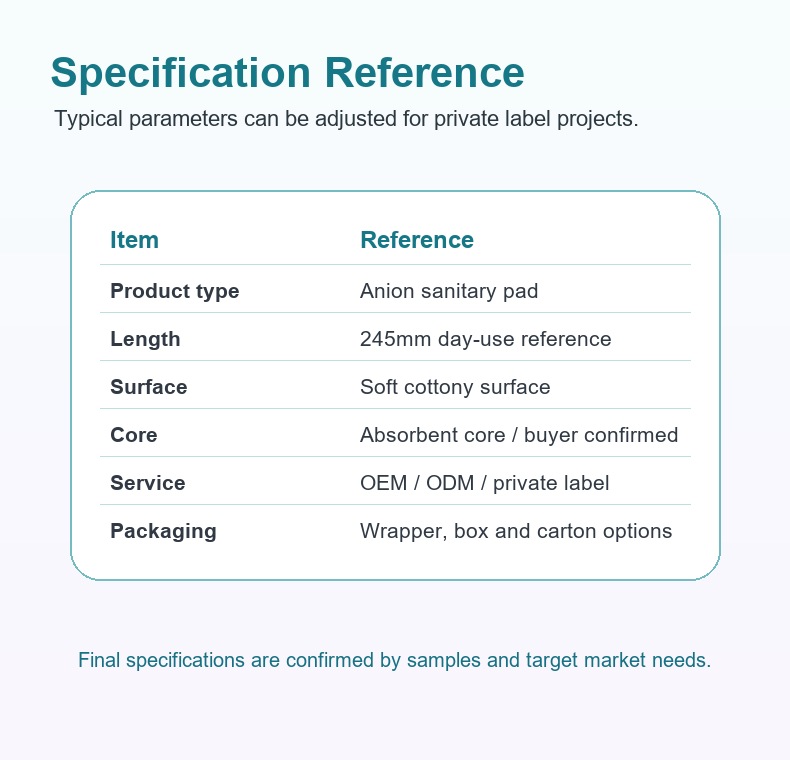
A sanitary napkin or a disposable menstrual pants product may look simple from the outside. Inside, it involves the topsheet, acquisition layer, absorbent core, SAP, backsheet, waistband, side protection structure and packaging specification. None of these parts works alone.
If the topsheet only pursues softness but fluid transfer is slow, the user may feel wet, sticky or stuffy. If the core is designed for very high absorption but the product becomes too thick, night movement may feel less comfortable. If the acquisition layer does not match the topsheet, fluid may stay near the surface and affect the dry-feel experience.
The same logic applies to the backsheet. If a backsheet only focuses on barrier performance without considering breathability, long-time wearing may feel warmer than expected.
OEM Development Should Start from the Target User
For brand buyers, the first question should not be how many selling points can be added. The better starting point is: who will use this product, and in what situation?
Before confirming materials, buyers should think about whether the user is most concerned about side protection, heat, thickness, friction, changing convenience or long-time wearing comfort. A night-use product, a daily-use product, a summer product, a postpartum product, a travel pack and a care kit should not be developed with the same structure logic.
Different Scenarios Need Different Structure Choices
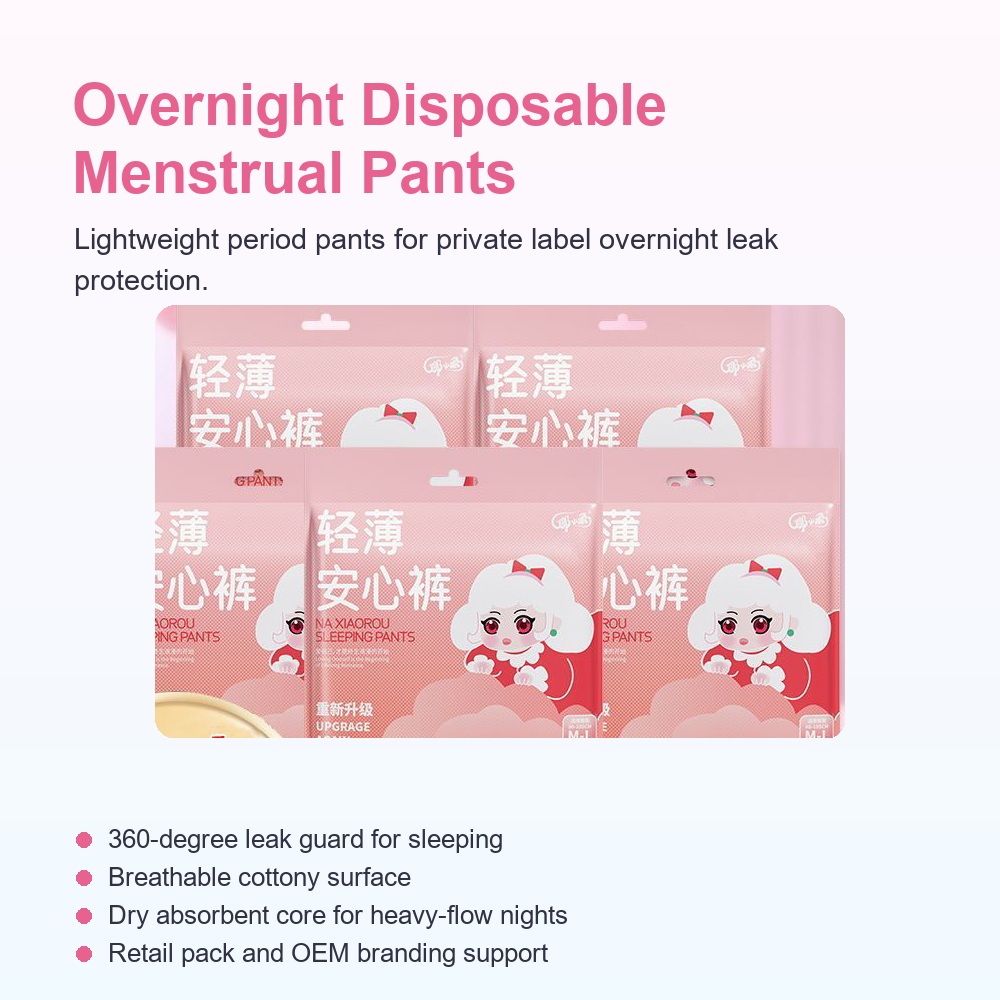
For overnight disposable menstrual pants, the key is not only absorption. Waist fit, movement stability, side protection, surface dry feel and long-time comfort all matter. For a summer product, breathability, lightness and lower stuffy feeling may be more important than simply making the product thicker.
For an entry-level private label product, cost, stability and repeat purchase experience should be balanced together. For a premium product line, real value does not come from pushing every parameter to the maximum. It comes from understanding the target user more accurately.
Why OEM and ODM Factory Experience Matters
This is where the value of an OEM or ODM factory becomes important. A good factory does not only manufacture according to a specification sheet. It should also help the buyer judge whether the structure is reasonable, whether the materials match, whether the sample needs adjustment and whether the packaging claims match the real user experience.
From product concept to sample review, packaging design and bulk production, each step should be connected to the real use scenario.
User Experience Decides Long-Term Sales
A product's long-term market performance is not decided only by a parameter table. It is decided by user experience. Consumers do not repurchase simply because a product uses expensive materials. They remember whether it feels comfortable, whether they feel confident at night, whether the surface feels dry after use and whether they want to buy it again.
OEM Buyers Should Review the Whole Combination
Professional product development is not about filling the product with more materials. It is about building the right structure. Materials, core design, topsheet, backsheet, waistband, packaging, cost and market positioning must be reviewed together.
Only then can a product move beyond being a sample that looks strong on paper. It becomes a product that can enter the market, be accepted by users and support repeat orders for the brand.
Structure Review Checklist for OEM Projects
| Review area | What to check | Buyer question |
|---|---|---|
| Target user | Age group, channel, use scenario and comfort concern | Who is this product serving? |
| Topsheet and acquisition layer | Softness, fluid transfer and dry-feel match | Does the surface feel match the use scene? |
| Absorbent core | Thickness, SAP ratio and structure balance | Does the core support comfort as well as absorption? |
| Backsheet and side structure | Barrier, breathability and side protection design | Will long-time wearing still feel acceptable? |
| Packaging and positioning | Pack count, wording and cost level | Does the package match the real product experience? |
Related OEM Pages
Buyers can review the sanitary napkin category, disposable menstrual pants category, custom packaging support and the Ligenyuan OEM Sourcing Column before preparing an RFQ.
FAQ
Should OEM buyers always choose more expensive materials?
No. Material grade matters, but the structure must match the target user, channel and use scenario. An expensive material used in the wrong combination may not create a better user experience.
Why can a thicker product still feel uncomfortable?
Thickness may increase the product presence during movement. If core structure, surface feel and fit are not balanced, a thicker sample may not be the more comfortable choice.
What should buyers discuss with the factory before sampling?
Buyers should discuss target user, use scenario, size or length, surface feel, core structure, packing format, cost range and packaging language before sample development.
Contact for OEM Product Development
If you are planning sanitary napkin OEM, disposable menstrual pants, private label packaging or a new feminine care product line, you can send your target user, use scenario, product reference and packing idea for discussion.
WhatsApp: +86 135 0848 9525
Email: ligenyuan901@gmail.com
Website form: Send an OEM inquiry
Column: This article is part of the Ligenyuan OEM Sourcing Column.
Turn this guide into an OEM brief
Share your product direction, target market, packaging idea and sample questions. Nafei can help translate the buying guide into a practical RFQ discussion.
- Product type: period pants, sanitary pads or mixed OEM project
- Target country, channel and buyer positioning
- Size range, material preference and sample review focus
- Private label artwork, pack count and estimated quantity