From Absorption Tool to Wearable Product: Why Period Care Design Is Changing
2026-07-02
If you have watched sanitary pad and period care advertising over the past few years, you may have noticed a quiet but important change. Earlier advertising often showed lab-style demonstrations: liquid poured onto a pad, fast absorption, a clean back view, and a message built around performance. The core idea was simple: the product can handle fluid.
Now the story is different. Pants-type products show a model turning, walking or moving. The waist edge sits close to the skin like real underwear. Elastic fabric recovery is shown in slow detail. The message has moved from this product can absorb to this product can be worn without being constantly noticed.
This is not only a change in advertising style. It reflects a deeper change in product design logic.
From Holding Fluid to Staying Wearable
For many years, leakage control was the most visible reason for a sanitary pad to exist. A product had to help users avoid embarrassing accidents, so absorption capacity, side protection and fast intake became the language of the category.
But once basic performance becomes more mature, the competition changes. If most products can already meet the basic functional expectation, what else can a brand compete on?
The answer is wearing experience.
The rise of disposable menstrual pants is a clear signal. They are not simply wider or larger sanitary pads. They are three-dimensional wearable products with waist, leg opening, fit curve and movement stability. They need to solve not only fluid management, but also whether the user can move, sit, sleep and change without constantly feeling the product.
The Hidden Logic of Wearable Design
Surface structure is also a wearing issue
In one industry discussion, Jiao Yong explained that a flat surface can become close and sticky after wetting, while a surface with fuller texture can leave small spaces between the material and the skin. That is not only absorption logic. It is contact logic.
The question becomes: when a product touches the body for hours, how can the surface reduce stuffiness and help the user feel drier?
Movement changes the design problem
Liu Haiwei once described product structures designed to move with the body, including shaped rear areas and core adjustments that help the product follow body movement more naturally. This way of thinking is closer to apparel design than to a simple absorbent sheet.
When the tail shape, waist stretch, surface curve and side structure are all considered together, the product is no longer just something placed in underwear. It becomes something worn on the body.

Why Parameters Alone Are Not Enough
A lab capacity number is easy to print on packaging. A user feeling, however, is much harder to prove before purchase. Words such as light, soft, breathable and barely-there are widely used, but they can become vague if they are not connected with sample review.
This is why OEM buyers should record wearing experience and use scenario, not only product specifications. Specifications help a buyer compare samples. Wearing notes help a brand understand why users may come back.
| Old comparison logic | Wearable product logic | OEM sample check |
|---|---|---|
| Absorption capacity | Dry surface feeling during use | Surface residue, pass-through speed, rewet review |
| Pad length and width | Fit during sitting, walking and sleeping | Waist, leg opening, rear shape, side stability |
| Material name | How materials work together | Topsheet, guide layer, core and backsheet balance |
| Single selling point | Scenario-led product experience | Overnight, summer, travel, postpartum or daily backup positioning |
What This Means for Private Label Buyers
For private label buyers, the key question is no longer only how much can it absorb? It is also: who will wear it, when will she wear it, what movement will happen, what body feeling matters, and how should the packaging explain the product without overstatement?
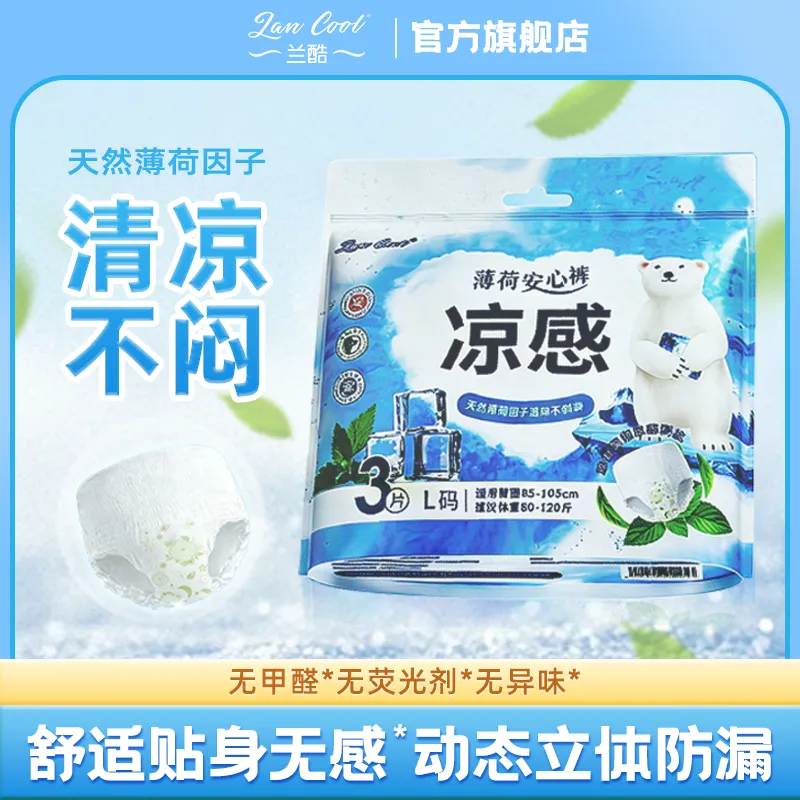
Cool-feel disposable menstrual pants are a useful example. The cooling story should not be presented as a magic claim. It should be connected with sample feel, summer-use scenario, waist comfort, core thickness and buyer-confirmed packaging language.
Internal Link Path
Review cool-feel disposable menstrual pants, the disposable menstrual pants category, and the OEM service page. For sample development, send details through Nafei contact page.
FAQ
Does wearable design replace absorption performance?
No. Basic performance still matters. The point is that mature products also need fit, surface comfort, movement stability and packaging clarity.
How should buyers review a wearable period care sample?
Review the sample by use scenario, waist fit, surface feel, core position, side coverage, packaging count and carton planning.
Can Nafei support cool-feel period pants OEM projects?
Yes. Buyers can discuss sample direction, private label packaging, size range, carton marks and market-specific wording after the product route is clear.
Discuss OEM Sample Development
Contact Ligenyuan: WhatsApp: +86 13508489525 | Email: ligenyuan901@gmail.com | Send an inquiry.
Turn this guide into an OEM brief
Share your product direction, target market, packaging idea and sample questions. Nafei can help translate the buying guide into a practical RFQ discussion.
- Product type: period pants, sanitary pads or mixed OEM project
- Target country, channel and buyer positioning
- Size range, material preference and sample review focus
- Private label artwork, pack count and estimated quantity