How to Audit a Sanitary Pad Factory: What to Look At on the Floor
A factory audit for pads isn't a checkbox tour. The things that actually predict a safe, consistent product are in the raw-material control, the core line, the hygiene zone and the QC bench. What to w···
Share target market, size range, pack count, artwork status and order quantity for quotation.
Introduction
I've walked factories that looked immaculate in the lobby and fell apart at the core line — open SAP bags on the floor, no batch records, a QC bench that was just a guy with a ruler. A pad audit that stays in the meeting room misses every risk that matters. The product is made on the floor, so that's where you look.
Here's what actually predicts a safe, consistent pad.
1. Raw-material control
The pad is only as clean as what goes in. Check:
- Supplier COAs for pulp, SAP, topsheet film, adhesive — every lot, not just the first.
- Quarantine and lot traceability — can they show you which batch of SAP went into last week's run?
- Storage — SAP and pulp sealed, dry, off the floor. Open sacks on a humid floor is a no.
2. The core line
This is where fluff meets SAP. Watch the blend and the wrap:
- Mixing uniformity — ask to see the blend step; uneven mix = lumpy, leaky cores.
- Contamination control — is the line enclosed? Are operators gloved and haired? Pads are skin-contact; the line should look like it.
- In-line checks — weight, thickness, SAP distribution monitored during the run, not just at the end.
3. Hygiene and the people
For a skin-contact product, the hygiene zone matters more than the showroom:
- Air handling / dust control on the line.
- GMP-style discipline — gowns, hand hygiene, no eating on the floor.
- Pest and microbial control program, with records.
4. The QC bench
What they test, and how often:
- Absorbency / retention per spec.
- pH and skin-safety where claimed.
- Microbiology — bioburden and absence of pathogens.
- Retention samples — do they keep a sample of each batch to trace a complaint back?
| Area | Green flag | Red flag |
|---|---|---|
| Raw materials | Lot COAs, sealed storage, traceability | Open sacks, no lot record |
| Core line | Uniform blend, enclosed, in-line checks | Lumpy mix, open line, no checks |
| Hygiene | GMP discipline, air/dust control | Casual floor, no program |
| QC | Retention samples, real bench tests | Visual only, no records |
Practical rule: spend ten minutes in the meeting room and two hours on the floor. The audit that predicts a safe product is the one that watches the blend, the hygiene and the QC bench — not the one that reads the slide deck.
Frequently asked questions
What should I check first in a pad factory audit?
Raw-material control — supplier COAs, sealed storage and lot traceability. If they can't show which batch of SAP went into last week's run, the rest of the audit barely matters. Then walk the core line, the hygiene zone and the QC bench.
Do I need a third-party audit or can I visit myself?
A self-visit catches a lot, but a recognised third-party audit (GMP/ISO-style) adds an independent record buyers and regulators trust. For a skin-contact product, at least one independent audit is worth it before volume commitment.
What's the biggest red flag on a pad line?
An open, uncontrolled core line with no in-line checks and no batch records. That combination means you can't trace or trust consistency — and for a skin-contact product, that's the risk that actually becomes a recall.
Audit-Ready OEM, Not Slide-Deck OEM
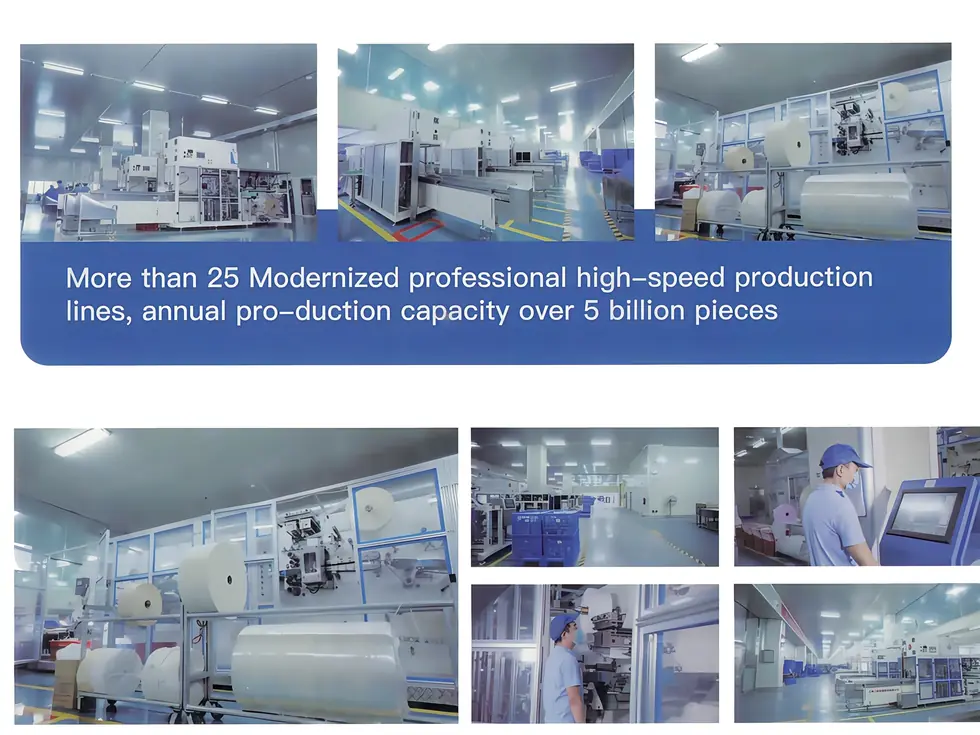
Choosing a pad manufacturer? Tell us your market and compliance needs, and we'll walk you through an OEM pad factory audit that goes to the floor — raw-material lots, the core blend, hygiene discipline and the QC bench — with batch records on hand. A quote and a facility walkthrough follow once we know your requirements.
Photos
Send a sampling brief for How to Audit a Sanitary Pad Factory: What to Look At on the Floor
Tell Nafei your target market, size range, absorbency preference, packaging artwork status and estimated order plan. Our team can reply with sample discussion and quotation details.
- Target market and sales channel
- Size, pack count and material preference
- Private label artwork or packaging reference
- Sample review, quantity and delivery timeline