Material Selection in Sanitary Products: Why More Expensive Is Not Always Better
2026-06-16
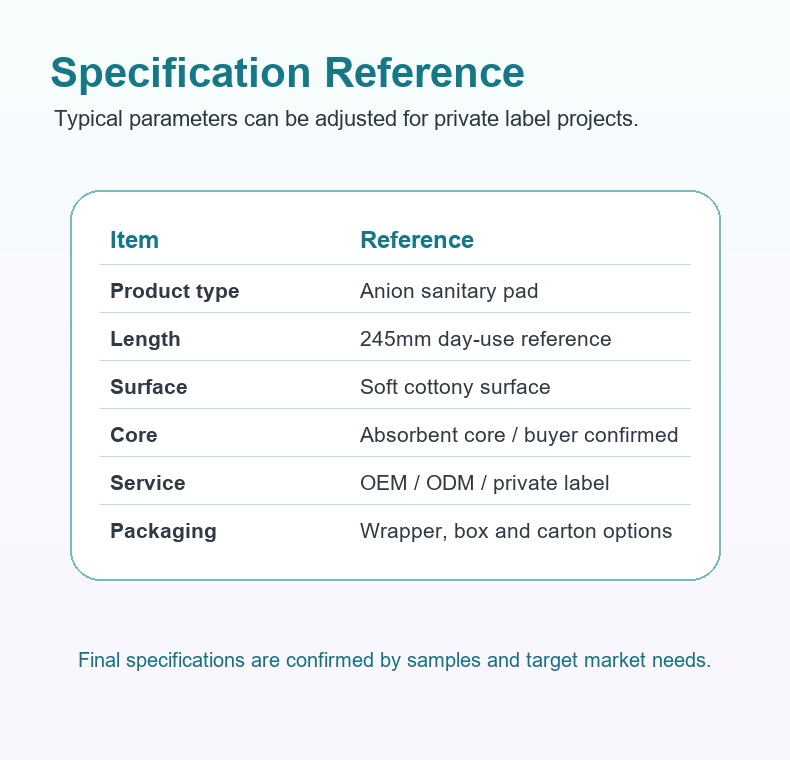
Higher-cost material can be useful, but it does not automatically make a sanitary product better. A material that works well in one product structure may not match another target market, pad length, wrapper format or price range.
For OEM buyers, material selection should begin with the target user scenario and the approved sample structure. The question is not which material sounds more advanced, but which combination supports the intended product and claim wording.
Why Material Value Depends on Structure
A topsheet, acquisition layer, core and backsheet must work as a system. Changing one layer may affect liquid transfer, thickness, flexibility or surface feel. Buyers should review material choices through sample results rather than through isolated supplier descriptions.
Material Selection Checklist for OEM Buyers
| Review area | Buyer check |
| Target channel | Retail, e-commerce, distributor project or private label launch |
| Use scenario | Day use, night use, travel pack, teen channel or premium shelf position |
| Surface material | Softness, texture, dry-feel review and compatibility with inner layers |
| Core direction | Absorbent structure, thickness and target capacity |
| Cost range | Material plan that fits buyer price position and order quantity |
| Claim control | Only use material claims that match the approved sample and documents |
How Buyers Can Avoid Over-Specification
Over-specification can raise cost without improving buyer value. A clearer approach is to confirm the target product position first, then ask the supplier to propose a material plan and sample. The final decision should be based on sample review, specification sheet and packaging wording.
How This Supports Better RFQ Communication
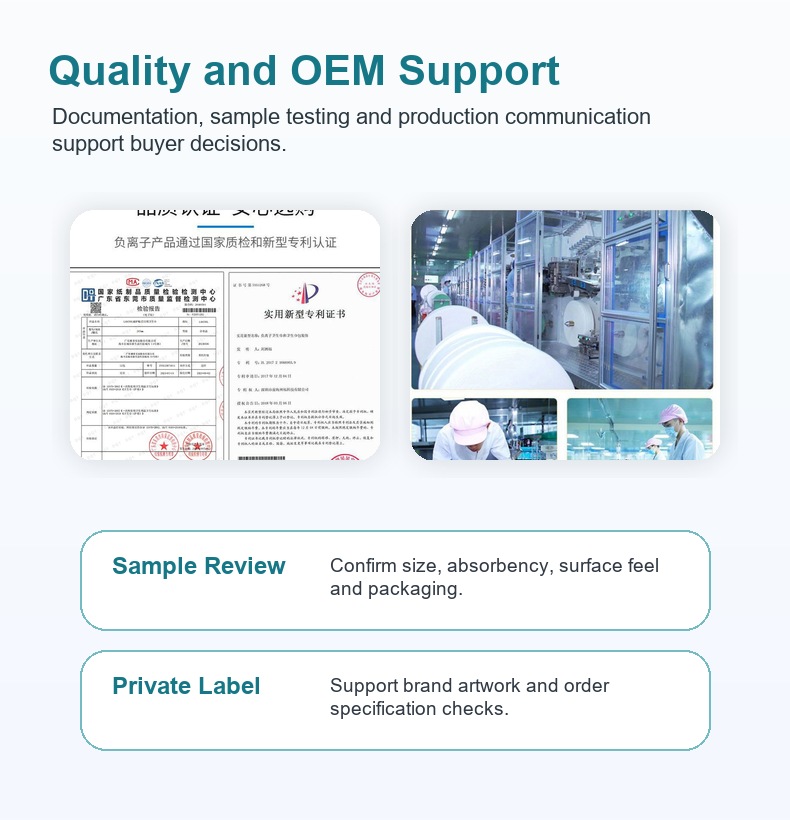
For a useful RFQ, buyers should share target use scenario, size or length requirement, material preference, packaging format, pack count, destination market and expected order quantity. This helps the supplier respond with a more relevant sample plan instead of a generic quotation.
Internal Links for OEM Planning
Related pages for follow-up reading: Sanitary Napkins, Private Label Sanitary Pads, Product Range, Contact Nafei.
FAQ for Buyers
Is the most expensive material always the best choice?
No. The best choice is the material combination that fits the product structure, target market and approved sample.
What should buyers ask before changing a material?
Ask how the change affects surface feel, acquisition, absorbent core, thickness, flexibility, packaging wording and cost.
Can material claims be used in marketing copy?
Yes, but they should match the actual sample and specification sheet, and should avoid unsupported or exaggerated wording.
Nafei can discuss feminine hygiene OEM projects based on buyer specifications, real product materials, sample review and private label packaging requirements.
Recommended Sanitary Pads OEM Path
This article belongs to the sanitary pads OEM and material review topic cluster. Buyers should review topsheet, acquisition layer, absorbent core, comfort wording, packaging and private label requirements together.
- Sanitary Pads OEM Manufacturer for day-use, overnight and ultra-thin pad options.
- Private Label Sanitary Pads for sample approval, brand planning and pack count decisions.
- Custom Sanitary Pad Packaging for wrapper, retail bag and carton mark details.
- Request Sanitary Pad Samples with surface, absorbency, size and packaging requirements.
FAQ Link Path for Buyers
What should sanitary pad buyers confirm first?
Confirm product use scenario, surface preference, absorbent structure and packaging claims before asking for final quotation.
Turn this guide into an OEM brief
Share your product direction, target market, packaging idea and sample questions. Nafei can help translate the buying guide into a practical RFQ discussion.
- Product type: period pants, sanitary pads or mixed OEM project
- Target country, channel and buyer positioning
- Size range, material preference and sample review focus
- Private label artwork, pack count and estimated quantity